Vocal Recording
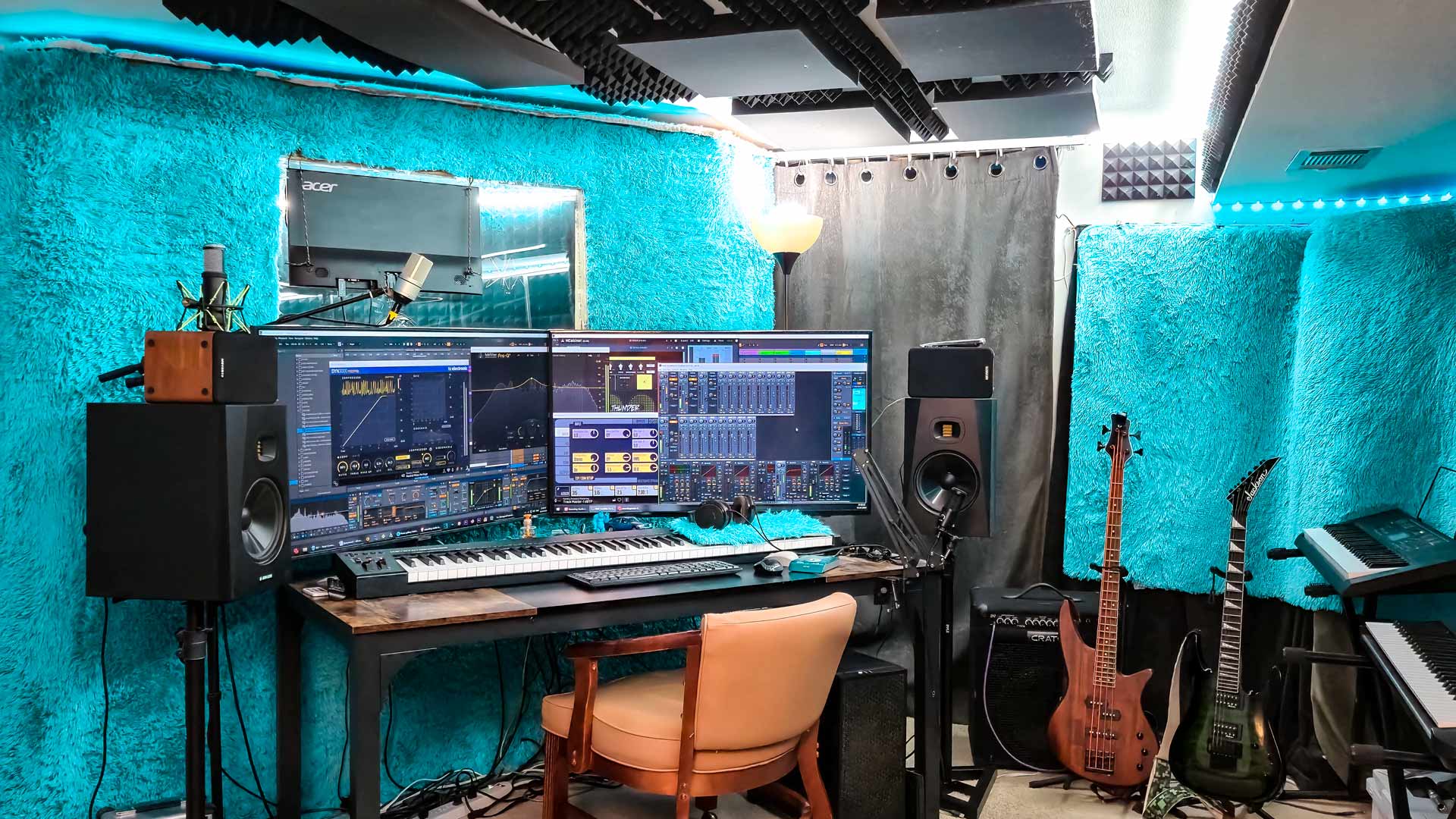
Most people expect a number.
One hour. Two hours. Three?
After almost 30 years of studio work, I can tell you that giving an exact number before I know the song, the arrangement, the artist, the level of preparation, and what we actually want to achieve would be little more than guessing.
Sometimes a well-prepared vocalist and a rehearsed song really can move through the studio very quickly. Sometimes a seemingly simple song opens up much more work than anyone expected.
Neither situation is unusual.
So how long does vocal recording take? In my experience, a relatively straightforward, well-prepared song with one main vocal can often be completed in roughly two to three hours. But that is an example, not a rule: some vocal recording sessions take less time, some take considerably longer, and the amount of time you book should never become an artificial deadline for the music.
That is why studio time is booked by the hour. You are not buying a promise that a song will take exactly one, two, or three hours. You are reserving professional studio time, with the sound engineer included, to work on your project and bring it toward the finished result you want.
There is no universal length for a vocal recording session. Two songs of the same length can require completely different amounts of studio time.
In a straightforward session, a prepared vocalist may record several strong takes quickly, choose the best performances, replace a few individual lines, and move naturally into editing and processing. In that situation, two to three hours can be enough to achieve a finished professional result.
But another three-minute song may involve experimenting with the delivery, recording doubles and harmonies, trying different ideas, comping many takes, correcting timing or pitch, or simply searching for something that feels better.
And that last part matters. Recording is not only a technical process with a predictable list of operations. At some point it can become a creative search, and creative search does not have a reliable stopwatch.
People often ask me, "How many hours will my song take?"
I understand why. You want to know what to book and approximately what the project will cost.
The problem is that before we start working, there are too many things I simply cannot know.
I may not yet know the arrangement, the structure of the song, the number of vocal parts, the condition of the instrumental, how thoroughly the song has been rehearsed, how comfortable the artist is in a studio, how many takes will be needed, or how much creative experimentation the artist wants to do.
Even a song that sounds simple can turn out to require very detailed work.
Asking for an exact studio time before all of this is known is a little like asking a builder, "How long will it take to build my house?" before showing the plans.
The builder can give you a number. Any number.
But what would that number actually be based on?
Recording is the same. I would rather be honest about uncertainty than give you a confident estimate that has no real foundation.
This is especially important when you choose the duration of your session on our booking page.
The minimum booking is one hour. But booking one hour does not mean that we must rush and somehow force the entire song to be finished in one hour.
Music does not benefit from panic and a stopwatch.
If you book two hours and the project needs four, we can simply continue working and the total cost will be based on the four hours actually used.
If another client is scheduled immediately after your original two-hour reservation, we stop at a logical point, save the project, and continue during the next available time that works for you.
There is nothing wrong with that. A song does not become worse because it was completed in two sessions instead of one.
The duration you select when booking reserves that block of the studio schedule. It should not become an artificial creative limit that forces us to rush the work.
From the outside, vocal recording can look very simple: turn on the microphone, sing the song a few times, choose the best take, and you're done.
In a real session, there are many more stages.
We begin by listening to the existing material and understanding the song, arrangement, structure, and what exactly we are going to record.
Then the recording setup has to be adjusted for the actual person standing at the microphone: microphone position and height, recording level, headphone level, balance between the instrumental and the artist's own voice, and a comfortable working environment.
We decide where different parts will be recorded and how the session will be organized.
Then we start recording.
There may be test takes. Warm-up takes. Good takes. Almost-good takes. Takes with one excellent line and another line that needs to be replaced.
We may record the main vocal, doubles, second voices, harmonies, backing vocals, ad-libs, and additional layers.
Sometimes three takes are enough. Sometimes we need many more.
The number itself is not important. The goal is to collect material that is actually good enough to build the song.
This is probably the biggest misunderstanding about studio time.
Finishing the performance at the microphone does not mean that the song is finished.
Now we listen to what was recorded and select the takes and individual sections that work best.
Those parts have to be placed correctly on the song timeline and assembled into a natural performance.
Timing may need to be corrected. Multiple vocals may need to be synchronized with each other. Pitch may need careful tuning so the notes are clean without destroying the character of the performance.
Then comes editing and vocal preparation.
Equalization. Dynamic processing. De-essing. Effects. Space. Balances. Automation where necessary. Additional details and processing. Sometimes the instrumental itself needs editing or adjustment.
And finally, mastering the finished track as a whole.
All of these are real parts of making the song. They take real time.
And all studio work at Ronter Sound is done with the client present and involved. You hear what is happening, you hear the changes, and you participate in decisions about the sound so the finished result reflects your song and your preferences.
Everything above can apply to a relatively simple project: one lead vocal recorded over an existing instrumental.
Add doubles and backing vocals, and there are more performances to record, select, edit, tune, align, balance, and process.
Add live instruments, and the recording process grows again.
Bring an arrangement as four or five stems instead of one finished stereo instrumental, and now there are more individual elements to balance and process during the mix.
Change the artistic goal from "a clean professional demo" to "let's explore different sounds until we find something special," and the project becomes different again.
That is why the length of the song alone tells me almost nothing about how long the project will take.
From my own studio experience, a relatively straightforward one-vocal song often takes around two to three hours from recording through the necessary processing, mixing, and mastering.
But please treat that as an example, not a promise.
There are sessions where a very well-prepared vocalist knows the song perfectly, sings two or three strong full takes, needs very little correction, and wants a relatively simple finished mix. In a case like that, even one hour can sometimes produce a finished result.
There are also projects where five hours are not enough.
The artist may need more takes. The song may be technically difficult. There may be many vocal layers. The performance may require detailed editing. Or the artist may simply have a very high standard for every detail and want to keep working until everything is exactly where it should be.
And between those extremes are countless other situations.
This is why "How many hours will my song take?" has no universal answer.
I want to make this especially clear.
If your song takes longer, this is not a judgment of you as an artist.
The studio works with the artist who walks through the door today, with the voice, song, experience, preparation, ideas, and ambitions that person has today.
You do not have to arrive perfect.
An artist has the right to be inexperienced. The studio has the responsibility to be professional.
Sometimes we need more takes. Sometimes we experiment with delivery. Sometimes a singer needs a little time to become comfortable with headphones and the microphone. Sometimes we discover a better idea while recording and decide to try it.
That is not wasted time.
That is the work.
My job is not to stand next to the clock waiting for you to perform perfectly. My job is to work with what we have, help make good decisions, and move the song toward the strongest result we can achieve together.
If you want to make that process faster, preparation certainly helps: how to prepare for vocal recording.
Let me show you a real example, because it explains studio time much better than any theoretical estimate.
Recently, a mother and daughter came to the studio. Both sing well. The daughter was recording the main vocal, the song had been rehearsed, the instrumental was ready, and she already had good singing skills.
This is a good example of a prepared client.
We recorded approximately three or four takes of each verse, chorus, and bridge.
Then we selected the best takes and re-recorded a few lines that were not as strong as the rest.
After recording, I worked on the vocal timing against the instrumental, made some pitch corrections, applied dynamic processing and EQ, worked with sibilance, set the necessary effects, built the mix, and mastered the song.
Three hours after we started, the client had a finished track.
Not a raw recording waiting to be fixed later.
Not "we ran out of time, so this will have to do."
A properly recorded, edited, tuned, mixed, and mastered song that sounded good, professional, and atmospheric.
Here is that three-hour result:
The client could see and hear what was happening throughout the entire session.
Every stage had a purpose. Every stage produced an understandable result. We were not stretching the session or looking for ways to fill time. We were continuously working on the song.
The client did not particularly want to spend more than three hours, and there was no reason to tell her that the track was somehow "unfinished." It wasn't.
We had reached a good, professional result.
And this is where the story becomes much more interesting.
A couple of days later, during some free time on the weekend, I opened that same project again.
The client did not ask me to.
The song did not need to be rescued.
I simply wanted to see how far I could take it if I stopped thinking about reasonable client studio time and started searching for the sound I personally wanted to hear.
So I experimented.
I changed balances. Tried different processing decisions. Worked more deeply with stereo and space. Reconsidered how different elements interacted. Tried different approaches and algorithms. I even searched for a different piano sound for the arrangement.
I listened again.
Changed something small.
Listened again.
Tried another direction.
Rejected it.
Tried something else.
Eventually I arrived at this:
The same recordings, after roughly ten additional hours of my own creative work:
To my ears, this version sounds different. More refined, more polished, more dimensional, and closer to what I personally consider a fully uncompromising final sound.
But notice something important:
These are the same original recordings.
The vocalist did not return to the microphone. Nothing had to be re-sung.
What changed was the depth of the work and the amount of experimentation.
This is the obvious question.
If I think the second version sounds better, why didn't I simply make it that way while the client was here?
The answer is time.
Finding that second sound took approximately ten additional hours.
That would have turned a three-hour project into roughly a thirteen-hour project.
And would it have been reasonable to ask the client to pay for thirteen hours instead of three?
Maybe for one client. Probably not for another.
More importantly, how could I promise beforehand that those additional ten hours would lead to something the client liked more?
I couldn't.
The second result reflects my taste and my decisions. The client might prefer it. The client might prefer the first version. Music is not mathematics where thirteen hours automatically equals a result that is 4.3 times better than a three-hour result.
And from the client's chair, those ten hours can look very strange.
The engineer has already listened to the same song hundreds of times. He moves controls by tiny amounts. Changes something in the stereo field. Tries another piano. Goes back. Changes an effect. Listens again.
Sometimes the difference between two individual moves is so small that a client can reasonably ask:
"What exactly are we doing now, and why am I paying for this?"
That is a completely fair question.
The difficult answer is that sometimes I don't yet know exactly which experiment will produce the final answer.
If I already knew, it would not be a search.
There is a difference between doing the work a song clearly needs and searching for something beyond an already good result.
Recording a clean take has a goal.
Correcting a wrong note has a goal.
Aligning vocals that obviously do not sit together has a goal.
Removing a problematic resonance has a goal.
Building a balanced professional mix has a goal.
But after the song already works, we enter a much more subjective territory.
Could the space feel deeper?
Could another piano fit the emotion better?
Could the stereo image become more interesting?
Could a different processing chain make the vocal feel more expensive, intimate, powerful, or natural?
Maybe.
But finding out takes experimentation.
I have had projects where finding the right sound required not just additional hours, but coming back on another day with rested ears and listening again from a fresh perspective.
This final stage — creative search — can be the slowest, most meticulous, most subjective, and least predictable part of the entire process.
It can also be fascinating.
But whether that additional search is worth paying for is not a decision the studio should make for you.
It is your song, your budget, your taste, and your decision.
I think this is just as important as explaining how much work can be done.
More studio time is not automatically better.
At some point a song becomes a finished, professional piece of work.
You can listen to it and say: the vocal is good, the performance works, the timing is clean, the notes are right, the mix is balanced, the song translates its emotion, and nothing distracts the listener from the music.
That is a legitimate finish line.
You are allowed to stop there.
You are also allowed to say, "I love it, but let's keep exploring."
Both decisions are valid.
My responsibility as the engineer is to show you what we are doing, explain why we are doing it, let you hear the result, and help you make that decision intelligently.
Studio time should not be saved by rushing.
It is saved by preparation, focus, experience, and good decisions.
Knowing the lyrics and melody helps.
Rehearsing the song helps.
Bringing organized files helps.
Fixing a weak line immediately instead of discovering it much later helps.
An experienced engineer recognizing what matters and what does not also saves time.
But "saving time" should never become "let's do worse work because the clock says so."
Music does not like that kind of hurry.
Choose the amount of time you reasonably want to reserve.
Just understand that this is a reservation window, not a prediction of exactly how long your song must take.
If the project is finished sooner, wonderful.
If it needs more time and the studio schedule allows us to continue, we can continue.
If another session follows yours, we simply continue your project at another available time.
There is no reason to panic, rush the last 20 minutes, or damage a song just because the original booking duration turned out to be too short.
We work on the project. We listen. We make decisions. You are involved in the process. And we use as much studio time as the project and the result you want actually require.
Sometimes one hour really is enough.
In my experience, a straightforward, well-prepared single-vocal song can often be completed in roughly two to three hours.
Sometimes five hours are not enough.
And if you decide to go beyond a good professional finish into deep creative experimentation, even I cannot honestly tell you beforehand where that search will end.
That uncertainty is not a problem with the studio process.
It is part of making music.
So when you book, don't think of the number of hours as a deadline hanging over your song.
Think of it as the amount of studio time you are reserving to start or continue the work.
Then we work calmly, professionally, and together — and let the song itself tell us what it needs.
If you're ready to schedule studio time, go to booking.
There is no fixed duration. In my experience, a straightforward and well-prepared single-vocal song can often be recorded, edited, processed, mixed, and mastered in around two to three hours. Some projects take less time and some take considerably more.
Yes. The minimum booking is one hour. One hour is the amount of studio time you reserve, not a requirement to finish the entire project within that hour.
If additional studio time is available, the session can continue and you pay for the actual time used. If another client is scheduled after your reservation, we save the project and continue during another available session that works for you.
Yes. The sound engineer is included in the hourly studio rate, and the session can include the recording, editing, vocal tuning, timing work, processing, mixing, mastering, and other work required for the project.
Because the actual time depends on the song, arrangement, number of vocal parts, artist preparation, number of takes, amount of editing and correction, mixing requirements, and the level of creative experimentation you want. Many of these things cannot be known accurately before the work begins.
Yes. Our work is done with the client involved in the session. You hear how the project develops, participate in decisions, and can approve the direction and sound as we work.
No. Preparation is only one of many factors. Song complexity, vocal layers, artistic decisions, editing requirements, and the level of detail you want can all change the amount of studio time required.
Yes, if you want to. Once the necessary work is complete, further creative experimentation with tone, space, balances, processing, instruments, and other details is possible. This creative-search stage is highly subjective and its duration and outcome cannot be predicted in advance.
Recording Guides