
Original Song Recording
Record an original song from a finished arrangement or develop it from the musical material already prepared. Vocals, instruments, harmonies, and additional parts can be recorded in stages.
Ronter Sound Recording Studio
Professional song recording for artists who have an original song, cover, single, demo, instrumental, or unfinished musical idea they want to turn into a complete recording.
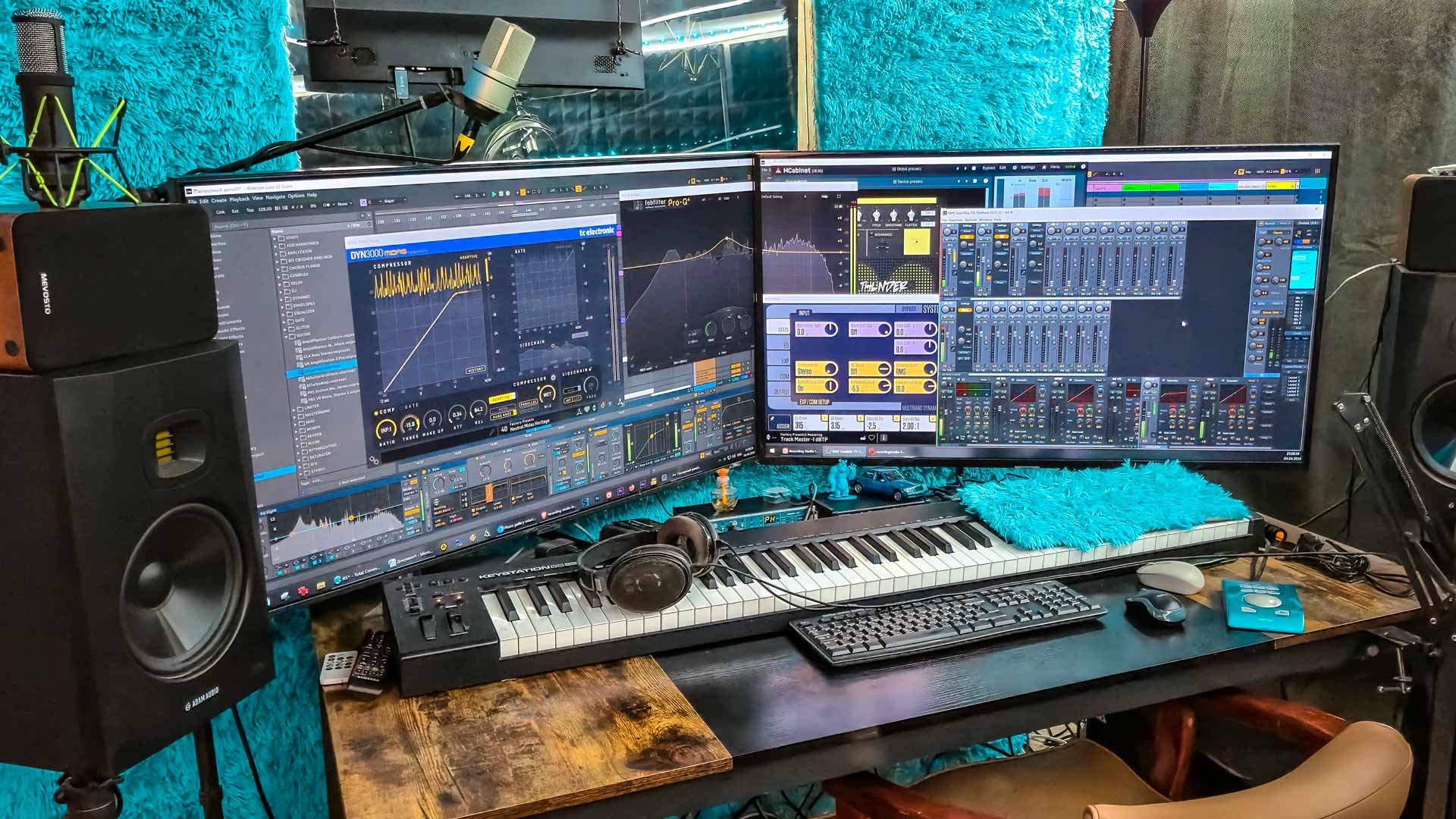
A song recording session may include vocals over an instrumental, live or separately recorded instruments, harmonies, backing vocals, overdubs, editing, mixing, and mastering.
I do not expect an artist to arrive with a perfect performance. The artist has the right to be inexperienced; the studio is obligated to be professional. My responsibility is to work with the voice, the song, and the ability the performer has today—and achieve the strongest possible result from that material. Our recording services for musicians, performers, songwriters, artists, and voice talent follow that same practical approach to the person and material in front of us.
One song, different starting points
You may arrive with a finished arrangement, an instrumental track, a voice-and-instrument performance, or only the beginning of a song. We build the session around the material you have. If the idea is still developing, song demo production can help turn an early concept into a version that is ready to record, evaluate, and develop further.
Record an original song from a finished arrangement or develop it from the musical material already prepared. Vocals, instruments, harmonies, and additional parts can be recorded in stages.
Record your interpretation of an existing song using an instrumental, live instruments, or both. The performance should remain recognizably yours instead of becoming an imitation without personality.
Bring your instrumental and record lead vocals, doubles, harmonies, backing vocals, and additional layers organized around one principal performance.
Record the voice and musical instruments within one project. Parts may be captured individually or layered through overdubbing in the sequence that best serves the arrangement. Projects that combine vocals with acoustic parts may also include dedicated piano recording or violin recording when those instruments are part of the song.
Build one complete song with the performance, additional parts, editing, mix decisions, and final preparation treated as parts of the same musical result.
A song does not have to be completely finished before entering the studio. We identify what already works and determine what should be recorded or developed next.
The artist has the right to be inexperienced. The studio is obligated to be professional.
We work with the song and the performer who came into the studio today—not with an imaginary ideal performer.Before the first take
The first goal is not to press Record as quickly as possible. We begin by adjusting the headphone level and the balance between the instrumental and the performer’s own voice.
The artist may sing through the song several times without keeping a take. When the performer realizes that the studio is a safe place to experiment—not a place for ridicule or demands for instant perfection—the performance becomes freer and more expressive.
Recording philosophy
A technically clean take is important, but a song needs more than correct notes. The material itself determines what the performance should become.
A rhythmic or dance-oriented song may depend on forward movement, confidence, and a delivery that carries energy through the entire section.
A lyrical song may need intimacy, breath, fragility, restraint, or a rough vocal edge. These qualities cannot simply be added later with software.
Whenever possible, we record a complete verse or chorus so the performer can follow the meaning of the lyrics and carry its emotional thread into the next section.
Some imperfect takes contain far more life and emotion than perfectly polished ones.
A breath, vocal texture, or rough edge can be a mistake—or the detail that gives the song its identity. The song must decide.From performance to usable material
Recording several takes is only the beginning. They must become one convincing performance rather than a collection of audible patches.
We record as many takes as the song requires. It may take three, ten, or twenty. The number does not matter; the quality and usefulness of the material do.
The strongest sections are selected according to pitch, intelligibility, tone, continuity, and emotional truth. A take with more life may win even if it requires careful correction. When several takes are used to create one lead performance, vocal comping helps assemble those strongest moments into a coherent vocal.
Sections taken from different performances must share the same emotional and sonic character. If the vocal sounds patched together, recording the line again is often the better decision.
Additional voices must strengthen the melody, arrangement, and meaning of the song. Every layer needs a musical purpose and must remain connected to the main performance. Doubles and harmonies often need precise vocal alignment so entrances, consonants, sustained notes, and phrase endings work together without losing the natural feel of the performance.
Manual editing
My editing process is manual. I work with the waveform, timing, spectral information, and—above everything else—what I hear. Automatic correction does not decide how a performance should feel. Detailed vocal editing and cleanup can remove distracting noises, rough transitions, unwanted breaths, and other technical problems while preserving the character of the take.
Pitch correction repairs intonation and note accuracy. Timing alignment places words, syllables, doubles, and harmonies correctly against the rhythm and the principal performance.
The purpose is not to create a mathematically perfect waveform. The purpose is to remove anything that distracts the listener from the song. For projects that involve broader material than vocals alone, editing, mixing, and processing sound and audio files can continue the same detailed work across the rest of the recorded audio.
If the choice is between precise but synthetic and natural but slightly loose, I will protect the natural performance.
The goal is accuracy without turning the artist into a robot: human imperfections may remain, but distracting mistakes should not.When more voices enter the song
Small variations that sound natural in a single voice can become blurred words, phase problems, and a crowded sound when several performances are layered.
Consonants, syllables, and phrase endings must work together. Intelligibility is part of respecting the listener and the meaning of the song.
Sustained notes in layered vocals need particular care. Poorly aligned voices can produce phase movement and make the vocal feel unstable or unfocused.
Different takes can carry different distance, pronunciation, texture, or energy. The selected pieces must sound as though they belong to the same performance.
Synchronization should create clarity, not erase personality. Timing is tightened only as much as the arrangement and number of layers require.
A focused version of the service
A song demo is one type of song recording. It may be a simple vocal and instrumental recording, a rough production, or a more developed version used to present the song. The amount of studio time depends on preparation, arrangement, performance, and the number of parts being recorded; our guide to how long vocal recording takes explains some of the factors that can affect the vocal portion of a session.
Record a vocal and instrumental version that clearly documents the melody, lyrics, structure, and character of the composition.
Add instruments, vocal layers, harmonies, editing, and a clearer production direction when the song needs a more complete form.
A demo may not require the full scale of a commercial release, but it should still respect the song and the person who will listen to it.
Completing the project
Recording creates the material. Editing, mixing, and mastering turn that material into a coherent final song without covering the performance with unnecessary processing. An audio engineer can guide these technical decisions from recording and editing through balance, processing, and final preparation.
Select the strongest performances, repair technical problems, organize tracks, align layered parts, and prepare clean material for mixing. When a project arrives as grouped exports rather than a full multitrack session, stem mixing provides a practical way to balance and process those combined elements.
Balance the voice, instruments, harmonies, effects, and musical space so every element has a purpose and the song communicates clearly. Full projects can continue through mixing, mastering, and track production when the song needs to move from recorded material to a finished master.
Prepare the completed mix for consistent playback while preserving the dynamics and character established during production.
When the work is done correctly, the listener stops noticing the technique and begins following the words, emotion, melody, and harmony.
Nothing should make the ear stumble and leave the musical story.Choose the closest direction
If your project is centered on a different recording need, use the service that most closely matches the material you want to create.
Individual instruments
For projects focused on recording an acoustic, electric, or digital instrument.
Broader projects
For musical projects involving tracks, instruments, vocals, overdubs, and several kinds of recording work.
Voice-focused sessions
For sessions centered specifically on lead vocals, vocal layers, voice, or speech recording. Russian-language narration, advertising, presentation, and spoken projects for a U.S. audience are also available through our Russian voice-over service for the USA.